Best Face Oil for Dark Circles by Ingredient Type

A castor-and-frankincense roller leads the shortlist, with a coffee bean oil and a cocoa-butter classic covering the rest of the under-eye options.

By Jessica TurnerUpdated 14 min read
On this page
- Best face oil for dark circles at a glance
- How I cut this shortlist to five
- What actually causes dark circles under your eyes?
- 1. UpNature Beauty Castor Oil Roll On Eye Roller — Best overall
- 2. Moulis Green Coffee Bean Oil — Runner-up
- 3. Palmer's Skin Therapy Face Oil — Best budget pick
- 4. The Ordinary 100% Organic Cold-Pressed Rose Hip Seed Oil — Best for beginners
- 5. Seven Minerals Organic Castor Oil Roll On — Best premium
- Roller versus dropper: which format wins under the eye?
- Ingredients worth paying attention to
- Is a face oil enough on its own?
- The verdict
- FAQ
The best face oil for dark circles in this shortlist is the UpNature Beauty Castor Oil Roll On Eye Roller, a 0.33 fl oz organic castor and frankincense blend built specifically for under-eye application. If you want a larger 2 fl oz bottle you can use on face, body and hair, the Moulis Green Coffee Bean Oil is the better buy. Neither will erase pigment on its own, and no face oil will.
Best face oil for dark circles at a glance
| Pick | Size | Format | Price |
|---|---|---|---|
Best overall UpNature Beauty Castor Oil Roll On Eye Roller |
0.33 fl oz | Rollerball | Check Price |
Runner-up Moulis Green Coffee Bean Oil |
2 fl oz | Dropper bottle | Check Price |
Best budget pick Palmer's Skin Therapy Face Oil |
1 fl oz | Dropper bottle | Check Price |
Best for beginners The Ordinary Rose Hip Seed Oil |
1 fl oz | Dropper bottle | Check Price |
Best premium Seven Minerals Organic Castor Oil Roll On |
0.33 fl oz | Rollerball | Check Price |



How I cut this shortlist to five
I mapped the picks to the two buyer profiles a search for the best face oil for dark circles actually splits into: readers who want a dedicated under-eye applicator, and readers who want a face oil they can use everywhere and dab under the eye as a bonus. Two rollers cover the first profile. Three dropper bottles cover the second.
Amazon's search returned these five under the query, but Amazon interprets a modifier like "dark circles" loosely. Not one of these oils is a clinical treatment for hyperpigmentation, and the listings do not claim to remove dark circles either. What they offer is a targeted vehicle for oils traditionally used around the eyes: castor, frankincense, jojoba, rosehip, and green coffee bean.
Three questions decided the ranking:
- Is the format built for the under-eye area, or is it a general face oil?
- Does the ingredient list match what buyers of this category actually want?
- What does the size and category placement say about how the product is meant to be used?
The UpNature roller wins on all three. The Moulis oil loses on format but wins on volume and versatility. Palmer's is the cheapest of the five. The Ordinary is the simplest formula. Seven Minerals sits at the top of the price range in this set.
What actually causes dark circles under your eyes?
Dark circles under your eyes are not one problem. They are at least four, and the fix depends on which one you have. Pigmentation from sun or genetics sits in the skin itself. Vascular shadowing is thin skin showing the blood vessels beneath. Structural shadowing comes from the hollow between the lower lid and the cheek. Puffiness casts its own shadow across the under-eye.
A face oil can only meaningfully touch two of those. Hydration plumps thin skin slightly, which reduces the visibility of underlying vessels. A gentle massage with a rollerball can encourage lymphatic drainage, which reduces puffiness. Neither effect is dramatic and neither is permanent.
What a face oil will not do is lift pigment out of the skin. If your circles are genetic pigmentation or post-inflammatory darkness, the oils in this roundup will hydrate the area, and that is where their effect stops. Ingredients like caffeine, which Moulis calls out on its listing, are associated with tighter-looking skin in cosmetic contexts, and vitamin C, which Palmer's lists, is associated with brightening. Neither manufacturer claims a specific reduction in dark circle intensity, and neither should you expect one.
1. UpNature Beauty Castor Oil Roll On Eye Roller — Best overall
A purpose-built 0.33 fl oz roller with organic castor oil and frankincense, sized and shaped for under-eye application and nothing else.
Best for: targeted under-eye application with a mess-free roller Skip it if: you want a larger multi-purpose bottle for the whole face
Two things separate this from the general face oils in the set. The 3.25-inch bottle fits in a pocket or a bedside drawer, and the rollerball limits how much oil ends up on your skin. Under the eye, that matters. Overapplying a heavy oil like castor near the lash line risks migration into the eye itself, and a rollerball gives you a thin, controlled line instead of a drop from a pipette.
UpNature says the blend is 100% pure organic castor oil and frankincense essential oil, and calls out "wrinkles" and "dark circles" directly on the listing. Treat that as the manufacturer's positioning rather than a proven result. The formula is short, which is its own recommendation: no fragrance, no filler oils, no preservatives beyond what the essential oil brings.
Category-wise, it sells faster in this set than the other roller, which suggests the format hits a real preference among buyers looking for the best face oil for dark circles. The trade-off is volume. At 0.33 fl oz you get a fraction of what the Moulis bottle holds, and no ability to spread the oil across the rest of the face.
Pros:
- Slim 3.25-inch bottle built for the bedside or a bag
- Rollerball controls how much oil reaches the under-eye
- Short ingredient list of castor and frankincense
- Sells faster in this set than the other roller
- Organic and non-GMO on the listing
Cons:
- Only 0.33 fl oz per bottle
- Rollerball limits use to the eye area
- Frankincense essential oil is potent and may irritate sensitive skin
2. Moulis Green Coffee Bean Oil — Runner-up
A 2 fl oz cold-pressed green coffee oil the brand pitches for face puffiness, body cellulite and hair, priced at the entry end of this set.
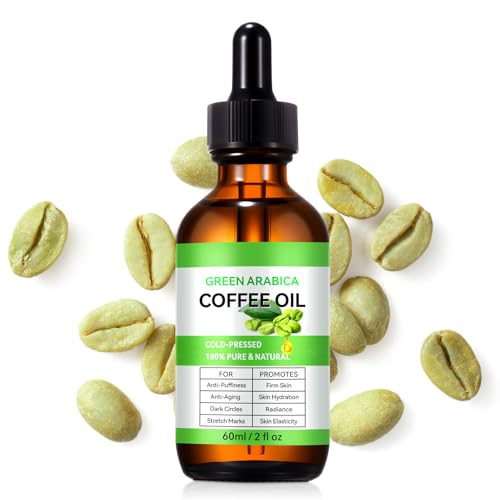
Best for: one 2 fl oz bottle that covers face, body and hair Skip it if: you prefer a dedicated eye applicator
Moulis is the volume play. At 2 fl oz it holds six times what either roller holds, and the brand explicitly positions it as multi-use: face, body, hair. If you already like layering oils into a serum or a moisturiser, this integrates without asking you to change your routine.
The listing highlights caffeine, chlorogenic acid and fatty acids as the active parts of the formula. Caffeine is the reason coffee-based products keep appearing in eye creams: it is associated with a temporary tightening effect on the skin around the eye. Moulis says the oil "targets face puffiness and dark circles" and that caffeine "supports smoother-looking skin". Take those as claims from the label, not measured outcomes.
Format is the compromise. A dropper is fine on the cheek and forehead, less controlled around the lid. You will end up dabbing the oil on with a fingertip rather than glide-applying it, and that means slower morning application than either roller. In this set, it is the second-cheapest, and only one other pick sits at the entry price band with it.
Pros:
- 2 fl oz bottle, six times the roller volume
- Caffeine, chlorogenic acid and fatty acids on the listing
- Cold-pressed from unroasted Arabica beans
- Genuinely multi-use: face, body and hair
- Sits in the entry price band of this set
Cons:
- Dropper is less controlled near the lash line
- Sells slower than the other picks in this set
- Green coffee scent will not suit everyone
3. Palmer's Skin Therapy Face Oil — Best budget pick
The cheapest oil in this set, a 1 fl oz cocoa-butter formula with retinol and vitamin C on the label, from a brand that has sold cocoa-butter skincare for decades.

Best for: a low-cost cocoa-butter oil with retinol and vitamin C on the label Skip it if: heavy cocoa-butter formulas feel too rich around your eyes
Palmer's is the cheapest of the five and, going by category rank, sells faster than every pick here except the UpNature roller. It sits in the Face Oil category rather than Essential Oil Blends, and the formula shows it: cocoa butter, retinol, vitamin C, and what Palmer's calls a Cetesomate Complex for absorption. That is a real skincare formulation rather than a single carrier oil, and vitamin C is the one ingredient in this set with a well-known association with brightening tone.
Two caveats. First, retinol around the eye is powerful and can irritate, so ease in with alternate nights rather than nightly application. Second, cocoa butter is a heavy base. On dry skin it feels rich and comforting. On combination or oily skin it can feel occlusive, and some readers will find it too much for the mid-face.
Palmer's has listed this since 2015 under model 4173-6, and the 1 fl oz bottle is small enough to travel. It is the only pick in this set with a published warranty listed, though the listing does not detail the terms.
Pros:
- Cheapest pick in this set
- Retinol and vitamin C on the ingredient list
- Sells faster than every pick here except the UpNature roller
- 1 fl oz bottle at 2.75 oz packaged weight
- Established Face Oil category placement
Cons:
- Cocoa butter feels heavy on oily skin
- Retinol needs a slow introduction, especially near the eye
- The listed "warranty" field is unclear from the listing
4. The Ordinary 100% Organic Cold-Pressed Rose Hip Seed Oil — Best for beginners
A single-ingredient 1 fl oz rosehip oil that keeps the formula transparent, ideal for a first face oil around the eye.

Best for: a simple single-ingredient rosehip oil for a first face oil Skip it if: you specifically want caffeine or frankincense on the ingredient list
If you have never used a face oil and want to know exactly what is going on your skin, this is the one. The formula is one thing: 100% organic, cold-pressed rosehip seed oil. No essential oils, no added actives, no fragrance. Rosehip carries natural vitamin A precursors and fatty acids, and the brand pitches it for uneven tone and elasticity rather than dark circles specifically.
The listing gives the clearest application advice in this set: a few drops on the face once a day, ideally at bedtime, with a patch test first. That is the right script for anyone new to face oils, and it applies double when you are dabbing near the eye. Overnight application also avoids the photosensitivity concern that comes with retinol formulas.
Weight matters here. At 1.06 oz packaged, and priced in the premium band of this set, it is not the cheapest way to buy rosehip oil. What you are paying for is the brand's stated cold-pressing and organic sourcing. The single-ingredient list is also the trade-off: if you specifically want caffeine or frankincense working alongside your carrier, this is not that product.
Pros:
- Single-ingredient formula, easy to patch test
- Cold-pressed and organic on the listing
- Clear bedtime application instructions
- 1 fl oz dropper suits full-face use
- No essential oils to irritate sensitive eyes
Cons:
- Sits in the premium price band of this set
- No caffeine, retinol or vitamin C in the formula
- Yellow tint can transfer to a pillowcase overnight
5. Seven Minerals Organic Castor Oil Roll On — Best premium
A 0.33 fl oz roller with castor, frankincense and jojoba, USDA-certified organic on the listing, sitting at the top of the price range here.
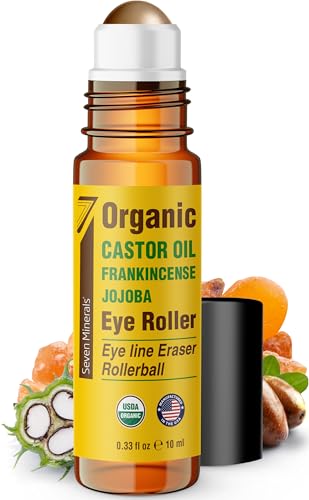
Best for: a castor, frankincense and jojoba roller with a stainless steel ball Skip it if: you'd rather pay less for the same 0.33 fl oz format
Seven Minerals is the direct comparison to the UpNature roller: same 0.33 fl oz size, same rollerball format, same core pairing of castor and frankincense. The differences are two. First, the formula adds jojoba, which the brand describes as mirroring skin's natural oils and which softens the heaviness of pure castor. Second, the ball itself is stainless steel rather than plastic, and stays cool against the skin, which some readers use as an extra puffiness cue in the morning.
It is the most expensive pick here and sells slower than the UpNature. That is a hard sell unless the jojoba or the steel ball genuinely matters to you. If you have used castor oil neat and found it too thick and slow to sink in, the jojoba dilution here is a real fix. If you have not, the UpNature does the same job in the same format at a lower price position.
The listing calls out USDA Certified Organic for the castor oil and steam distillation for the frankincense. Both are meaningful sourcing details in this category.
Pros:
- Castor, frankincense and jojoba three-oil blend
- Stainless steel rollerball stays cool on skin
- USDA Certified Organic castor on the listing
- Steam-distilled frankincense
- Small-batch bottling on the listing
Cons:
- Most expensive pick in this set
- Sells slower than the other roller here
- Same 0.33 fl oz size as a cheaper alternative
Roller versus dropper: which format wins under the eye?
Under the eye, format decides more than ingredient list. The skin there is the thinnest on your face, and how much oil reaches it matters as much as what is in the oil.
A rollerball meters the dose. You get a thin film in a controlled line, and the ball itself gives you a gentle massage that helps with morning puffiness. The UpNature and Seven Minerals rollers both use this format. The trade-off is volume: 0.33 fl oz per bottle means you replace them faster if you use them on more than just the eye.
A dropper gives you flexibility. You can measure three drops for the whole face or one drop dabbed on a fingertip for the eye. The Moulis, Palmer's and Ordinary bottles all use droppers. The catch is control near the lash line, where you do not want oil migrating into the eye itself.
The rule of thumb: if under-eye is your only use case, buy the roller. If you want a face oil that also happens to work around the eye, buy the dropper.
Ingredients worth paying attention to
Every oil in this set claims some benefit for the under-eye area, but three ingredients have a specific association with dark circles.
- Caffeine. Present in the Moulis green coffee bean oil. Associated with a temporary tightening effect that can reduce the appearance of puffiness. Not a pigment lifter.
- Vitamin C. Present in the Palmer's formula. Associated with brightening uneven tone over sustained use. Sensitive to light and air, so how the product is bottled matters.
- Caffeine plus rollerball massage. The combination in a coffee-based roller is what most eye-serum brands lean on. None of these products deliver exactly that combination, but Moulis in a fingertip dabbing pattern comes closest.
Retinol, in the Palmer's oil, is a separate case. It addresses fine lines rather than pigment, and needs a slow, careful introduction around the eye. Frankincense and rosehip are traditional carriers with milder profiles and no strong dark-circle-specific claim.
Is a face oil enough on its own?
Is a face oil enough on its own for dark circles? Usually not, and it depends on what is causing them. For vascular shadowing and puffiness, a well-applied oil with gentle massage can visibly reduce the appearance, especially in the morning. For genetic pigmentation or sun damage, an oil is a support layer, not a treatment. Sleep, hydration and daily SPF do more.
Treat any of these oils as one part of a routine. Apply at night after cleansing. Use a rollerball or a fingertip, not a heavy drop. Give it four to six weeks before deciding whether it is helping. If your circles are severe or new, see a dermatologist rather than shopping harder.
The verdict
The UpNature Beauty Castor Oil Roll On Eye Roller is the right default here because it does one job well: it delivers a short, transparent castor and frankincense formula through a 0.33 fl oz rollerball designed for the under-eye area. That is the exact combination most people searching for the best face oil for dark circles actually want. It sells faster in this set than any other roller and sits at a mid price position, which makes it easy to recommend without qualifiers.
If you want more volume and multiple uses out of a single bottle, the Moulis Green Coffee Bean Oil is the better buy. Two fl oz, caffeine on the ingredient list, and enough oil to cover face, body and hair from one purchase. If budget is the deciding factor, Palmer's is the cheapest pick in this set and brings retinol and vitamin C along with cocoa butter. Beginners who want a single-ingredient formula should choose The Ordinary rosehip. Only pay the premium for Seven Minerals if the jojoba blend or the stainless steel ball genuinely matters to you.
FAQ
Does a face oil actually reduce dark circles?
Does a face oil actually reduce dark circles? Partly, and it depends on the cause. Oils hydrate thin under-eye skin, which reduces the visibility of the vessels beneath, and rollerball massage can shift morning puffiness. Neither effect lifts pigment. If your circles are genetic or from sun damage, an oil supports the area but does not treat the pigment itself.
Is the UpNature roller worth it compared to Seven Minerals?
Is the UpNature roller worth it compared to Seven Minerals? Yes, for most buyers. Both are 0.33 fl oz castor and frankincense rollers. Seven Minerals adds jojoba and a stainless steel ball at the top of the price band in this set. UpNature keeps the formula shorter and sits at a mid price position. Choose Seven Minerals only if the jojoba dilution matters to you.
Can I use these oils on my full face too?
Can I use these oils on my full face too? The dropper bottles yes, the rollers not really. Moulis at 2 fl oz, Palmer's at 1 fl oz and The Ordinary at 1 fl oz all give you enough volume to cover the whole face. The UpNature and Seven Minerals rollers hold 0.33 fl oz and are shaped for targeted eye application only, so full-face use would empty them fast.
How long before I see a difference in dark circles?
How long before I see a difference in dark circles is the wrong question for morning puffiness, which any of these oils plus a gentle roller massage can reduce the same day. For appearance of uneven tone, give a consistent nightly routine four to six weeks. Pigment from genetics or sun will not shift on that timeline with an oil alone, no matter what the listing implies.
What should I avoid in an under-eye face oil?
What should I avoid in an under-eye face oil is a short list: added fragrance, heavy essential oil blends applied undiluted, and formulas so thick they migrate into the eye overnight. Retinol is fine but needs a slow start, alternate nights at first. Patch test any new oil on the inner forearm for 24 hours before putting it near the eye, especially if your skin is reactive.
The straightforward move here is to start with the UpNature roller, use it nightly for a month, and see whether your morning under-eye appearance shifts. It is the smallest commitment and the format best matched to the problem. If nothing changes after a month, the issue is likely pigment rather than puffiness or dryness, and no face oil in this shortlist will fix that on its own. At that point, a dermatologist visit is a better use of your money than another oil. Until then, the roller is the honest answer to the best face oil for dark circles question in this set.