Best Gentle Tinted Moisturizer: CeraVe Leads

SPF number is the spec every shopper compares first, and it is not what decides this category. Filter type, shade range and tube size matter more. Six picks, ranked, with the conditions that change the answer.

By Jessica TurnerUpdated 18 min read
On this page
- Best gentle tinted moisturizer at a glance
- How I screened this shortlist down to six
- What does the SPF number actually change here?
- 1. CeraVe Tinted Sunscreen for Face — Best overall
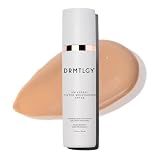
- 2. DRMTLGY Universal Tinted Moisturizer SPF 46 — Best premium
- 3. Cetaphil Tinted Facial Moisturizer SPF 50 — Best for families
- 4. Cetaphil Redness Relieving Tinted Moisturizer — Best for heavy use
- 5. Neutrogena Anti-Aging Perfector Tinted Facial Moisturizer — Best lightweight
- 6. LAURA GELLER Quench-n-Tint Tinted Moisturizer — Most versatile
- Mineral, hybrid or chemical: which filter suits reactive skin?
- How long does a 1.7 oz tube really last?
- What the listings leave out
- When a different pick wins
- The verdict
- FAQ
The best gentle tinted moisturizer is the CeraVe Tinted Sunscreen for Face, a 1.7 oz mineral SPF 30 that uses zinc oxide and titanium dioxide as its only filters. If you want a higher SPF figure and a dewier finish, the DRMTLGY Universal Tinted Moisturizer SPF 46 is the pick instead, though it adds octinoxate to the formula. Filter chemistry is what splits this field, not shade range. Two picks here use mineral filters alone. One blends mineral and chemical. Two carry no published SPF claim at all.
Best gentle tinted moisturizer at a glance
| Pick | SPF | Filter type | Price |
|---|---|---|---|
Best overall CeraVe Tinted Sunscreen for Face |
SPF 30 | 100% mineral claim zinc oxide, titanium dioxide |
Check Price |
Best premium DRMTLGY Universal Tinted Moisturizer SPF 46 |
SPF 46 | Hybrid claim zinc oxide, octinoxate |
Check Price |
Best for families Cetaphil Tinted Facial Moisturizer SPF 50 |
SPF 50 | Broad spectrum, type not stated | Check Price |
Best for heavy use Cetaphil Redness Relieving Tinted Moisturizer |
SPF 40 | Mineral-based claim | Check Price |
Best lightweight Neutrogena Anti-Aging Perfector Tinted Facial Moisturizer |
SPF 20 | Titanium dioxide named | Check Price |
Most versatile LAURA GELLER Quench-n-Tint Tinted Moisturizer |
None stated | No filters listed | Check Price |



How I screened this shortlist down to six
I built this list around buyer profiles rather than a scoring sheet, because "gentle" means something different depending on what your skin actually reacts to. Four profiles drove the picks.
- The reactive-skin shopper. Wants mineral filters only, no fragrance, and ingredients that support the barrier rather than strip it. CeraVe and the redness-relief Cetaphil serve this profile.
- The daily-SPF shopper. Buys tint as a side effect and protection as the point. The SPF 46 and SPF 50 picks land here.
- The shared-shelf shopper. One tube, several faces, a range of tones. The Cetaphil SPF 50 claims a blendable tint for a variety of skin tones.
- The coverage shopper. Wants a tint that builds, and handles sun protection in a separate step. The Laura Geller Quench-n-Tint is the only pick built that way.
A word on the word "gentle". The listings here use it loosely. CeraVe says its formula is safe and gentle and free of oxybenzone, avobenzone and benzene. Both Cetaphil products claim hypoallergenic, fragrance-free, non-comedogenic formulas, and the SPF 50 says it is clinically proven as gentle enough for daily use on sensitive skin. Those are manufacturer claims on a label, not independent verification, and no listing here publishes a patch-test result you can read. So treat "gentle" as a shortlist filter, not a guarantee. You still judge it on your own skin.
I compared the published specifications side by side, and the honest finding is that specification depth varies wildly across this set. CeraVe publishes size, shade, weight, dimensions and a release year. Laura Geller publishes three fields. That gap shapes the ranking more than any single feature bullet.
What does the SPF number actually change here?
Most tinted moisturizer guides rank by SPF and stop. Here's the trick with that: the SPF spread in this set runs from 20 to 50, and the protection difference at the top of that range is much smaller than the number suggests.
What the SPF figure does tell you is category. An SPF 30 or higher product is being sold as a sunscreen that happens to be tinted. An SPF 20 product is being sold as a moisturizer with a little coverage. The Laura Geller pick, with no stated SPF, is a foundation. Those three things belong on different shelves even though Amazon files them near each other.
The filter list matters more. Zinc oxide and titanium dioxide sit on the skin surface. Octinoxate absorbs into it. If your skin flares with chemical filters, the SPF 46 pick is off your list at any protection level, and the SPF 30 CeraVe becomes the highest mineral-only figure available in this group.
- SPF 50 on the Cetaphil, the highest figure here, filter type not specified in the listing
- SPF 46 on the DRMTLGY, named as a hybrid of zinc oxide and octinoxate
- SPF 40 on the redness-relief Cetaphil, described as mineral-based
- SPF 30 on the CeraVe, described as 100% mineral with only physical filters
- SPF 20 on the Neutrogena, with titanium dioxide named among the ingredients
So the real deciding criterion is not the number. It is whether the listing tells you what is doing the filtering.
1. CeraVe Tinted Sunscreen for Face — Best overall
The best gentle tinted moisturizer for most reactive skin, because it is the only pick that publishes both a full mineral filter list and a barrier-support ingredient set.
Best for: reactive skin that needs mineral-only filters plus barrier ingredients Skip it if: your skin tone sits outside a three-shade range
Two things separate this from the rest of the set. First, the filter disclosure. CeraVe states the formula is 100% mineral and contains only zinc oxide and titanium dioxide, and names three things it leaves out: oxybenzone, avobenzone and benzene. No other pick here is that specific about what is and is not in the bottle. Second, the supporting cast. The brand lists niacinamide to help calm skin, hyaluronic acid to help retain moisture, and three ceramides.
The practical numbers hold up too. It's a 1.7 oz tube, matching the largest SPF format in this group, at 2.57 oz total weight in a 5.95 x 1.54 x 2.56 in box. The shade here is Light, one of three tinted shades the brand says blend across a range of tones. It's the cheapest of the six and it sells faster than the rest of this set by a wide margin, which is a useful signal when you are choosing between near-identical mineral formulas.
The trade-off is coverage ambition. This is a sheer tint that CeraVe positions as wearable alone or under makeup as a primer, so if you want a tint that builds toward foundation, the Laura Geller pick does that and this does not.
Pros:
- Only pick naming both mineral filters explicitly
- Cheapest of the six
- Niacinamide, hyaluronic acid and three ceramides listed
- 1.7 oz tube, largest format tied here
- Fastest-selling pick in this group
Cons:
- Three shades total, a narrow range for deeper tones
- SPF 30 is the second-lowest figure in this set
- Sheer coverage only, not buildable
- Only two sellers list it
2. DRMTLGY Universal Tinted Moisturizer SPF 46 — Best premium
The high-SPF dewy option, and the one to pick if a radiant finish matters as much as protection.

Best for: shoppers who want the highest SPF figure here and a dewy finish Skip it if: you avoid chemical filters like octinoxate
DRMTLGY calls this a hybrid broad spectrum SPF 46, formulated with zinc oxide and octinoxate. That combination is the reason it can claim a high SPF figure without the heavy white cast a mineral-only formula at the same level tends to leave. The listed extras overlap CeraVe's: niacinamide for uneven tone, hyaluronic acid for hydration, and vitamin E as an antioxidant.
It's a 1.7 oz bottle at 1.7 oz weight, 1.5 x 6 x 1.5 in, sold in a single finish the listing labels Dewy rather than a shade name. Note that: you are buying a finish, not a matched tone, and the brand's answer to shade matching is a universal tint that adapts. That works well for some skin tones and poorly for others, and the listing gives you no shade chart to check against.
The other thing worth knowing is the FSA/HSA angle. DRMTLGY states this SPF 46 sunscreen qualifies for HSA or FSA reimbursement, which no other pick here claims.
This is the most expensive pick here, and the trade-off against CeraVe is direct. You pay more, you get a higher SPF number and a dewy finish, and you give up the mineral-only filter list that made CeraVe the winner.
Pros:
- SPF 46, second-highest figure in this set
- Zinc oxide and octinoxate both named
- Niacinamide, hyaluronic acid and vitamin E listed
- Only pick claiming FSA/HSA eligibility
Cons:
- Most expensive pick here
- Octinoxate rules it out for chemical-filter avoiders
- One universal tint, no shade options published
- Only two sellers list it
3. Cetaphil Tinted Facial Moisturizer SPF 50 — Best for families
The highest SPF figure in the group, in a formula the brand aims at every skin type on the shelf.
Best for: a shared bathroom shelf where several skin types use one tube Skip it if: you need a published shade name before buying
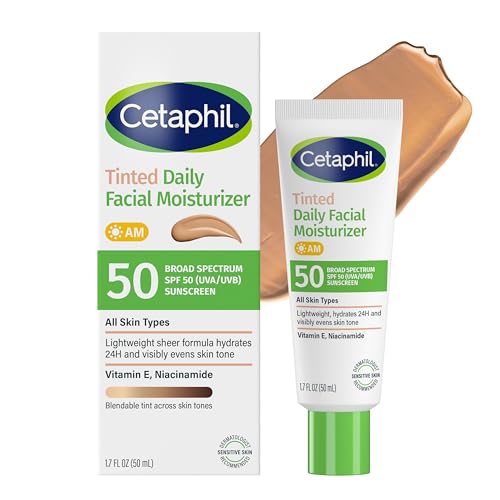
SPF 50 is the top figure in this comparison, and Cetaphil pairs it with 24-hour hydration and a blendable tint the brand says complements a variety of skin tones. That last claim is what earns the family label. One tube, several faces, no shade matching required in theory.
The formula details follow the same pattern as the other modern picks: niacinamide to help even tone and support the barrier, vitamin E for antioxidant protection. Cetaphil also lists the negatives that matter for a shared product, calling it fragrance free, paraben free, oil free, hypoallergenic and non-comedogenic, and suitable for all skin types.
It's a 1.7 oz tube measuring 6.51 x 1.57 x 2.4 in, listed with a release year of 2026, making it the newest formula here. The shade field simply reads Clear, which tells you nothing useful about the tint you'll actually get.
Here's where it loses ground. The listing never says which UV filters it uses. It claims broad spectrum protection and stops there. For anyone shortlisting on filter chemistry, that silence is disqualifying, and it's the single reason this SPF 50 sits below an SPF 30. It's also the slowest seller of the six by a large margin, and no weight is published.
Pros:
- SPF 50, highest figure in this set
- Newest formula here, listed as 2026
- Fragrance free, paraben free, oil free, non-comedogenic
- Blendable tint claimed for a variety of tones
Cons:
- No UV filter type disclosed in the listing
- Shade listed only as Clear
- No published weight
- Slowest seller of the six
- Only two sellers list it
4. Cetaphil Redness Relieving Tinted Moisturizer — Best for heavy use
A neutral tint built to cancel redness rather than match your skin tone, with SPF 40 and soothing extras.

Best for: redness-prone skin that wants neutralising tint, not shade matching Skip it if: you want a formula updated in the last few years
This one has a narrower job than the others, and it does it differently. Cetaphil describes the tint as neutral and formulated to neutralize the appearance of redness while evening skin tone. So the colour is doing corrective work, not coverage work. If flushing across the cheeks and nose is your reason for buying tint at all, that reframing is the whole point.
The soothing list is unique in this set: licorice extract, allantoin and caffeine, all named as ingredients designed to calm redness-prone skin. The sun protection is broad spectrum SPF 40 with what the brand calls skin-gentle mineral-based UV filters. Note "mineral-based" rather than 100% mineral. That wording leaves room for a hybrid, which is why CeraVe's flat 100% mineral statement still reads clearer.
Format is a 1.7 oz tube at 1.7 oz weight, 6.56 x 2.01 x 1.5 in. The colour field reads white, which describes the tube rather than the tint.
Age is the honest weakness. The listing gives 2016 as the release year, making this the oldest formula here alongside the Neutrogena, and the newer Cetaphil SPF 50 above it adds niacinamide and a higher SPF for a mid-range position too.
Pros:
- SPF 40 with mineral-based filters claimed
- Licorice extract, allantoin and caffeine listed
- Neutral tint aimed at redness, not tone matching
- Hypoallergenic, fragrance free, non-comedogenic
Cons:
- 2016 formula, oldest here alongside the Neutrogena
- "Mineral-based" is vaguer than a full filter list
- Neutral tint won't suit anyone wanting real coverage
- Only two sellers list it
5. Neutrogena Anti-Aging Perfector Tinted Facial Moisturizer — Best lightweight
The smallest, thinnest option here, and the only one built around retinol.

Best for: a light layer under makeup on days you barely need coverage Skip it if: sun protection is your main reason for buying
Two specifications set this apart. It's a 1 fl oz tube at 28.3 g, the smallest volume in the group, in a 5.13 x 1.5 x 0.88 in body that is under an inch deep. That slim profile is genuinely useful if this lives in a bag rather than on a shelf. And it's the only pick here formulated with retinol, which Neutrogena pairs with antioxidants and vitamins and positions against fine lines.
The shade is published as 20 Fair To Light, and it's the only pick in this set that names an actual numbered shade rather than a finish or a vague colour word. If you shop by shade code, that's a real advantage. The brand describes the coverage as lightweight and blendable, sheer, aimed at evening tone and smoothing texture, with a natural dewy finish. Titanium dioxide appears in the ingredient list alongside broad spectrum SPF 20.
Two cautions. SPF 20 is the lowest protection figure here by a clear margin, so this is a moisturizer with sun protection rather than a sunscreen. And retinol is not a neutral ingredient for reactive skin, which sits awkwardly against a gentle brief. It's the second-cheapest pick, and it's the smallest tube, so the small format is doing some of that work.
Pros:
- 1 fl oz tube, slimmest format at 0.88 in deep
- Only pick with a numbered published shade
- Retinol plus antioxidants and vitamins listed
- Titanium dioxide named in the formula
- Second-cheapest of the six
Cons:
- SPF 20, lowest protection figure here
- Retinol can irritate reactive skin
- Smallest volume, so it runs out fastest
- 2016 formula
- Only two sellers list it
6. LAURA GELLER Quench-n-Tint Tinted Moisturizer — Most versatile
The largest container here and the only buildable one, but you supply the sun protection yourself.

Best for: buildable coverage on medium skin with peachy undertones Skip it if: you need SPF in the same step
This is the outlier, and it's worth understanding why. Laura Geller files this under foundation, and the brand describes it as a water-based foundation with skincare benefits rather than a sunscreen with tint. Hyaluronic acid is the headline ingredient, listed to lock in moisture while a hint of tint evens skin tone toward a no-makeup look.
Coverage is the differentiator. Applied with a finger or a foundation brush, blending upward and outward, the brand says you can build to your desired level. Every other pick in this set is fixed-sheer. This one is not, and that flexibility is the reason it earns a place.
It's a 2.4 oz container, the largest volume here by 0.7 oz over the 1.7 oz tubes, in shade 04 Medium, which the brand describes as suited to medium skin with neutral and soft peachy undertones. That's the most specific undertone guidance in the group.
The problems are real. No SPF is stated anywhere in the listing, so daily sun protection has to come from a separate product. And the published specification set is the thinnest here: size, colour and count, with no weight, no dimensions, no model, no release year. It also sits in the more expensive half of the set while offering no published sun protection at all.
Pros:
- 2.4 oz, largest container in this set
- Only pick with buildable coverage
- Hyaluronic acid named as the core ingredient
- Most specific undertone description here
Cons:
- No SPF stated, so a separate sunscreen is required
- Thinnest published specifications of the six
- Second-most expensive despite no sun protection
- Single medium shade in this listing
- Only two sellers list it
Mineral, hybrid or chemical: which filter suits reactive skin?
This is the question the SPF number hides, and it's the one I'd answer before comparing anything else.
Mineral filters are zinc oxide and titanium dioxide. They sit on the surface. CeraVe is the only pick here stating a 100% mineral formula and naming both. The redness-relief Cetaphil says mineral-based, which is close but not the same commitment.
Hybrid formulas mix both types. DRMTLGY names zinc oxide alongside octinoxate, a chemical filter, and that pairing is how it reaches SPF 46 without a heavy finish.
Undisclosed is its own category, and two picks land there. The Cetaphil SPF 50 claims broad spectrum protection with skin-gentle filters but never lists them. The Laura Geller has no SPF claim at all.
Most shoppers miss that the disclosure itself is the signal. A brand that names zinc oxide and titanium dioxide, and separately names three things it excludes, has decided the ingredient list is a selling point. A brand that writes "broad spectrum" and moves on has decided it isn't. Neither approach proves anything about how the product feels on your face, but one lets you check it against a dermatologist's advice and the other doesn't.
If you have had a reaction to sunscreen before and you don't know which ingredient caused it, start with the pick whose filters you can read.
How long does a 1.7 oz tube really last?
Volume is the least glamorous specification in this set and one of the most useful, because a face SPF only works at a dose most people underapply.
Four of the six picks are 1.7 fl oz. That's the standard tube in this category, and it makes CeraVe, DRMTLGY and both Cetaphil products directly comparable on size. The two outliers pull in opposite directions:
- Laura Geller: 2.4 oz. The largest here, 0.7 oz more than the standard tube.
- Neutrogena: 1 fl oz, 28.3 g. The smallest, at well under two-thirds of a standard tube.
Here's what that means in practice. If you use a tinted SPF as your only sun protection, you apply a real quantity every morning, and the small tube empties fast. If you use it as a light tint on selected days, the 1 fl oz Neutrogena tube is a fair size and its 0.88 in depth makes it the easiest to carry.
The other thing volume changes is cost per use, and I can't put figures on that. What I can say is that CeraVe is the cheapest pick here and comes in the standard 1.7 oz size, while the Neutrogena is second-cheapest in the smallest size. That combination is why the winner's value case is the strongest in the group even before you look at the formula.
What the listings leave out
Comparing these six side by side, the gaps are as informative as the specifications. Four things no listing here tells you:
- Full shade charts. CeraVe mentions three shades and this listing is Light. Neutrogena publishes 20 Fair To Light. Laura Geller publishes 04 Medium. The two Cetaphil products publish Clear and white, which describe nothing. If your shade sits outside fair-to-light or medium, you're guessing.
- Finish beyond one adjective. DRMTLGY says Dewy. Neutrogena says natural dewy. Nobody publishes a matte option, and nobody quantifies it.
- Filter percentages. Even CeraVe, the most transparent listing here, names zinc oxide and titanium dioxide without concentrations. Concentration is what drives white cast.
- Warranty or satisfaction terms. Not one of the six publishes any, which is normal for skincare but worth knowing before you buy an untested shade.
There's a fifth gap worth naming. Every "gentle" and "sensitive skin" claim in this set comes from the brand's own marketing. Cetaphil's SPF 50 says clinically proven as gentle enough for daily use, and that phrasing points at a test you cannot read. Treat it as a reason to shortlist, never as a reason to skip a patch test on your jawline for a few days.
When a different pick wins
Three conditions flip the recommendation away from CeraVe, and each one is checkable before you order.
- You've reacted to a chemical filter. Then CeraVe stays, and DRMTLGY is out entirely regardless of its SPF 46. Octinoxate is named in that formula.
- Redness is the main problem. Then the Cetaphil Redness Relieving Tinted Moisturizer wins on ingredients CeraVe doesn't carry: licorice extract, allantoin and caffeine, plus a neutral tint designed to cancel rather than cover.
- You want coverage you can build. Then Laura Geller's Quench-n-Tint is the only answer here, at 2.4 oz, and you add a separate sunscreen underneath.
Two smaller flips. If the highest SPF figure is non-negotiable and you'll accept an undisclosed filter list, the Cetaphil SPF 50 is the number you want. If the product lives in a handbag, the Neutrogena's 1 fl oz tube at 0.88 in deep is the one that fits.
The verdict
The CeraVe Tinted Sunscreen for Face wins the best gentle tinted moisturizer pick, and the reason is disclosure plus value. It's the cheapest of the six, it comes in the standard 1.7 oz size, and it's the only listing that names zinc oxide and titanium dioxide as its only filters while separately naming oxybenzone, avobenzone and benzene as exclusions. Add niacinamide, hyaluronic acid and three ceramides, and you have a product where every claim on the page is something you can check against advice from your own dermatologist. It also sells faster than the rest of this set by a wide margin.
Two conditions flip it. If you want the highest SPF figure paired with a dewy finish and you're fine with octinoxate, DRMTLGY's SPF 46 is the better buy, and it's the only pick claiming FSA or HSA eligibility. If facial redness is the problem you're actually solving, the Cetaphil Redness Relieving formula brings licorice extract, allantoin and caffeine plus a neutral correcting tint, none of which CeraVe offers.
The runner-up's exact advantage over the winner is 16 points of SPF and a finish sold on radiance. What it gives up is the mineral-only filter list, and for reactive skin that's the trade I wouldn't make.
FAQ
Is the best gentle tinted moisturizer worth buying over separate products?
Worth buying over separate products depends on how you actually get dressed. A tinted SPF collapses two morning steps into one, and CeraVe's 1.7 oz tube covers both at the lowest price in this group. But a dedicated sunscreen plus a foundation gives you more coverage control. If you skip sunscreen on rushed mornings, the combined product wins on the days it matters.
Which offers better value, the CeraVe or the Neutrogena?
Better value between the CeraVe and the Neutrogena comes down to volume. CeraVe is the cheapest pick here and gives you 1.7 fl oz with SPF 30 and mineral-only filters. Neutrogena is second-cheapest but only 1 fl oz at SPF 20. You get less product and less protection for a smaller saving, so CeraVe is the stronger value unless you specifically want retinol.
Can I wear a tinted moisturizer under makeup?
Wear a tinted moisturizer under makeup, yes, and three of these listings say so directly. CeraVe positions its SPF 30 as wearable alone or as a tinted primer beneath makeup. DRMTLGY says its SPF 46 layers under makeup or works alone. Neutrogena describes sheer blendable coverage for daily use. Let the layer set for a minute before applying foundation over it.
What SPF level do I need in a tinted moisturizer?
The SPF level you need starts at 30 for daily face protection, which rules out the Neutrogena's SPF 20 as a standalone. This set gives you SPF 30 from CeraVe, SPF 40 from the redness-relief Cetaphil, SPF 46 from DRMTLGY and SPF 50 from the newer Cetaphil. Above 30, the filter type and how much you apply matter more than the number.
What is the biggest mistake when buying a gentle tinted moisturizer?
The biggest mistake when buying a gentle tinted moisturizer is treating "sensitive skin" on the label as verification. Every gentle claim in this set is the brand's own. CeraVe at least names its filters and exclusions so you can check them. Buy the one whose ingredient list you can read, then patch test along your jaw for several days before committing to full-face use.
Start with the CeraVe Tinted Sunscreen for Face and check whether the Light shade suits your tone before anything else, because shade is the one variable no specification list here can settle for you. It's the cheapest pick in this comparison, it uses the standard 1.7 oz tube, and it's the only listing that tells you exactly which filters are doing the work. That transparency is worth more than 20 points of SPF on a page that won't say what's inside. If your morning routine currently skips sunscreen entirely, one tube that handles tint and protection together is the change most likely to stick.