Best Anti Chafing Cream for Eczema-Prone Skin

Eczema-prone skin needs a friction barrier that won't sting. I lined up six anti-chafe creams by size, format and stated ingredients, then matched each one to the buyer it fits.

By Jessica TurnerUpdated 14 min read
On this page
- Can any anti-chafe cream truly claim to treat eczema?
- Best anti chafing cream for eczema at a glance
- How I screened these six down from a crowded shelf
- 1. Hyland's Chafing Relief: Cream-to-Powder to Soothe — Best overall
- 2. BodyGlide Body Glide For Her Anti Chafe Balm — Best for families
- 3. A+D Medicated Rash Ointment 1.5 oz — Best budget pick
- 4. Blue Steel Sports Anti Chafe Cream 100ml — Best for beginners
- 5. Hermon Intertrigo Cream for Skin Folds — Best for heavy use
- 6. Monkey Movement Anti-Chafe Skin Healing Cream — Best premium
- Cream, balm or stick: which format suits sensitive skin?
- What the listings leave out
- When a different pick wins
- The verdict
- FAQ
The best anti chafing cream for eczema-prone skin is Hyland's Chafing Relief, a 3 oz cream-to-powder tube that goes on smooth and dries to a light finish on sensitive spots. If you share the tube across a family, BodyGlide For Her, a 0.8 oz stick with no petroleum or lanolin, is the cleaner grab-and-go. This category is not for anyone treating a medical flare. If a rash is broken, weeping or spreading, see a clinician, not a shelf.
Can any anti-chafe cream truly claim to treat eczema?
Short answer: no. None of these six is a prescription eczema treatment, and Amazon's search returned anti-chafe products, not medicated dermatology. So treat "eczema" here as a warning about your skin, not a promise on the label.
If you have eczema, your barrier is already compromised. Friction and sweat make it worse, and the wrong cream can sting. That is the real risk with a bad pick. What you want from an anti-chafe cream is a gentle, low-irritation barrier that reduces rubbing without adding new triggers.
Two products here name relevant ingredients. A+D lists colloidal oatmeal, a common skin-soothing agent. Monkey Movement sits in an eczema and psoriasis care category and names propolis. Neither claim is verified by testing, and both are the manufacturer's words. Read the full ingredient list on the live listing, patch-test on a small area, and stop if it burns.
The best anti chafing cream for eczema-prone skin, then, is the one that adds the least. Fewer added irritants, a clean finish, and a format you will actually reapply.
Best anti chafing cream for eczema at a glance
| Pick | Size | Format | Price |
|---|---|---|---|
Best overall Hyland's Chafing Relief |
3 oz | Cream-to-powder | Check Price |
Best for families BodyGlide For Her Balm |
0.8 oz | Stick balm | Check Price |
Best budget pick A+D Medicated Rash Ointment |
1.5 oz | Ointment | Check Price |
Best for beginners Blue Steel Sports Anti Chafe Cream |
3.3 fl oz | Cream | Check Price |
Best for heavy use Hermon Intertrigo Cream |
4.2 fl oz | Zinc oxide cream | Check Price |
Best premium Monkey Movement Anti-Chafe Balm |
3.4 fl oz | Propolis balm | Check Price |




How I screened these six down from a crowded shelf
I did not swab these on my own skin. I compared the published specifications and the manufacturers' stated ingredients side by side, then cut on three grounds. Here is what disqualified a listing before it reached the table.
- No named soothing or barrier ingredient. A plain lubricant with nothing gentle disclosed is a poor fit for reactive skin. Every survivor names at least one relevant ingredient or a barrier claim.
- A format that fights sensitive areas. Anything that had to be rubbed in hard, or that stained, was out. Friction during application defeats the point.
- A size that made no sense for the price position. A tiny tube sitting at the top of this set had to earn it on ingredients, or it was cut.
What survived splits cleanly by job:
- Two entry-price picks: A+D at 1.5 oz and BodyGlide at 0.8 oz.
- Two mid-price picks: Hyland's at 3 oz and Blue Steel at 3.3 fl oz.
- Two premium picks: Hermon at 4.2 fl oz and Monkey Movement at 3.4 fl oz.
Sales rank tells a quieter story. BodyGlide and Hyland's are the two buyers reach for most often in this set. The propolis balm sells the slowest of the six. That is context, not a verdict.
1. Hyland's Chafing Relief: Cream-to-Powder to Soothe — Best overall
Hyland's wins because its cream-to-powder finish protects a rubbing spot without leaving the tacky film that irritates eczema-prone skin.
Best for: sensitive-area chafing on already irritated skin Skip it if: you want a barrier that stays put through a swim
What sets Hyland's apart in this set is the format. It applies like a cream and dries to a powder-light finish, per the maker. On skin that hates being coated, that dry-down matters. A greasy stick sits on the surface and can trap heat; a powder finish lets a chafed spot breathe.
The 3 oz tube is the mid size here, larger than the BodyGlide stick and the A+D ointment, smaller than the Hermon tub. Hyland's names aloe, shea butter, calendula and tea tree oil as soothing ingredients. Tea tree can sting reactive skin, so patch-test first. The listing says it is made both to protect and to soothe already-chafed skin, which is the exact double job someone with eczema-prone skin needs.
It is also the one buyers here reach for most alongside BodyGlide. The trade-off: this is a soothe-and-protect cream, not a water-resistant sport barrier. If you swim or sweat through a marathon, Blue Steel's sweat-resistant claim suits you better.
Pros:
- Cream-to-powder dry-down avoids a tacky film
- 3 oz tube, a workable mid size
- Names aloe, shea butter and calendula
- Made to soothe already-chafed skin
- One of the two most-reached-for here
Cons:
- Tea tree oil may sting reactive skin
- No stated sweat or water resistance
- Only one other seller lists it
2. BodyGlide Body Glide For Her Anti Chafe Balm — Best for families
BodyGlide earns the family slot as a clean, no-mess stick with no petroleum, lanolin or mineral oils, marked child-safe by the maker.

Best for: a shared household stick that dries clean and clog-free Skip it if: you need a large tub for full-body coverage
The stick format is why this suits a family. You twist it up, swipe it on before dressing, and no one's fingers touch the product. That hygiene matters when several people share one tube. It is the smallest here at 0.8 oz, or 22.7 g, so it is built for targeted spots rather than full-body coverage.
BodyGlide lists no petroleum, lanolin or mineral oils, and calls the ingredients allergen-free and plant-derived. For eczema-prone skin, that shorter, cleaner story is reassuring, though you should still check the label yourself. The maker says it keeps pores clog-free and lets sweat escape, and marks it vegan and child-safe.
It is also the only pick here with a published warranty, covering manufacturing defects from authorised dealers. That is rare in this category. The trade-off is capacity. At 0.8 oz it is the smallest tube in the set, so a household that chafes daily will run through it faster than the 4.2 fl oz Hermon.
Pros:
- Clean twist-up stick, no fingers in the product
- No petroleum, lanolin or mineral oils
- Marked child-safe and vegan by the maker
- Only pick here with a published warranty
- Second-cheapest of the six
Cons:
- Smallest tube at 0.8 oz
- Not ideal for full-body coverage
- Spot use only, empties quickly with daily wear
3. A+D Medicated Rash Ointment 1.5 oz — Best budget pick
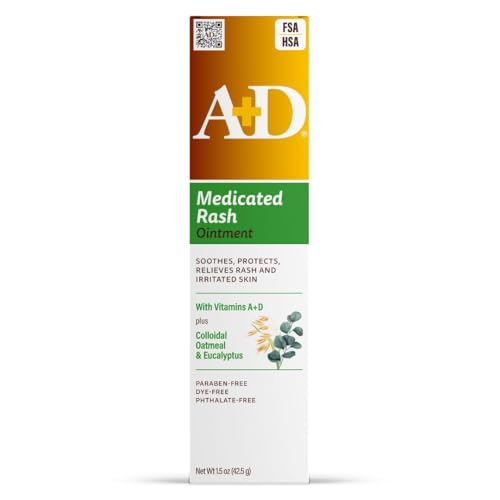
A+D is the value pick because it names colloidal oatmeal, a recognised skin-soother, at the cheapest position in this set.
Best for: spot-treating rash-prone patches with colloidal oatmeal Skip it if: you want the biggest tube for daily full-body use
A+D is the cheapest of the six and the only one that names colloidal oatmeal, an ingredient many people with reactive skin already trust. The listing also names Vitamins A and D and eucalyptus oil. Eucalyptus can be brisk on broken skin, so patch-test before you spread it wide.
At 1.5 oz it is a compact tube, larger than the BodyGlide stick but well under the sport creams. It sits in a rash and poison-ivy category rather than a pure anti-chafe one, which tells you its center of gravity is soothing irritated skin, not endurance friction. The maker frames it as a versatile rash ointment for dry, chapped and irritated skin, and a travel-friendly first-aid kit staple.
This is a 2025 release, so it is the newest formula here. The trade-off: it is an ointment, which means a heavier feel than the cream-to-powder Hyland's, and the small tube limits full-body use. Treat it as a targeted soother for the patches that flare.
Pros:
- Cheapest pick in the set
- Names colloidal oatmeal for soothing
- Compact 1.5 oz travel size
- Newest formula, a 2025 release
Cons:
- Eucalyptus oil may irritate broken skin
- Ointment feel is heavier than a cream
- Small tube limits full-body coverage
4. Blue Steel Sports Anti Chafe Cream 100ml — Best for beginners
Blue Steel is the easy first cream, a non-greasy, sweat-resistant formula that washes off with soap and water.

Best for: a first anti-chafe cream for running and cycling Skip it if: you react to fragranced sport formulas
Blue Steel is the pick for someone new to anti-chafe creams. The maker calls it non-greasy and non-staining, and says it washes off easily with soap and water. That forgiving profile lowers the stakes for a first try. It is a 3.3 fl oz tube, weighing 3.53 oz, and measures 1.57 x 5.55 x 2.52 in, so it slides into a gym bag.
Its headline claim is sweat and water resistance, built to hold through heat and moisture. That makes it the runner and cyclist's choice among these six, and the one to reach for over Hyland's when you sweat hard. The maker lists coverage for thighs, groin, feet, chest and underarms, so it is a broad friction cream.
One caution for eczema-prone skin: this is a sport formula, and sport formulas are often fragranced. The listing does not confirm a fragrance-free status, so read the label. The trade-off versus the top picks is transparency. Blue Steel names no specific soothing agent the way Hyland's or A+D do, leaning instead on its non-greasy, wash-off feel.
Pros:
- Non-greasy and non-staining, per the maker
- Sweat and water-resistant claim
- Washes off with soap and water
- Broad body coverage listed
Cons:
- No named soothing ingredient
- Fragrance status not confirmed
- Sport focus over sensitive-skin focus
5. Hermon Intertrigo Cream for Skin Folds — Best for heavy use
Hermon is the pick for high-volume use, the largest tube here with a zinc oxide barrier aimed squarely at skin folds.

Best for: skin-fold chafing under breasts, belly and thighs Skip it if: you want a pocket-sized tube for travel
Hermon is the biggest in the set at 4.2 fl oz, so it is built for people who reapply often and over larger areas. Where BodyGlide is a spot stick, this is the tub you keep by the shower for daily fold care. If skin-on-skin rubbing under the breasts, belly or inner thighs is your problem, this is designed for exactly that.
Its differentiator is zinc oxide, which the maker says forms a protective layer to reduce friction and manage moisture. Zinc oxide is a familiar barrier ingredient and generally well tolerated, which matters for reactive skin. The listing also calls it non-greasy and lightweight, made for daily use after bathing or exercise.
It sits at a premium position despite a plain feature set, and it is the second-priciest here. The trade-off is portability and detail. There is no fragrance or full ingredient breakdown in the specs, and at 4.2 fl oz it is not a bag-friendly travel tube. But for pure volume and a straightforward zinc oxide barrier, nothing else in this set matches it.
Pros:
- Largest tube at 4.2 fl oz
- Zinc oxide barrier, a well-tolerated ingredient
- Targeted at under-breast and belly folds
- Non-greasy daily-use claim
Cons:
- Second-priciest in the set
- Too large for travel
- No fragrance detail in the listing
6. Monkey Movement Anti-Chafe Skin Healing Cream — Best premium
Monkey Movement is the premium natural pick, a propolis-based balm listed in an eczema and psoriasis care category.

Best for: athletes wanting a propolis-based natural balm Skip it if: you avoid bee-derived ingredients
Monkey Movement is the most expensive pick here, and the only one filed under eczema, psoriasis and rosacea care. That placement is why it makes the list for this search. It is a 3.4 fl oz balm, and the maker calls it all-natural and organic, built to coat skin with a barrier against irritation.
Its signature is propolis, a bee-derived resin the brand credits with easing itchy, sore and bumpy skin. That is the manufacturer's claim, not a tested result. And it carries a real caveat: anyone with a bee or propolis sensitivity should steer well clear. The maker frames it as a chamois cream for cycling, running and surfing, plus after-effort skin care, so it doubles as a recovery balm.
It is the slowest seller of the six, which reflects its niche natural positioning more than any fault. The trade-off is the price. It sits at the top of this set without extra published capability over the cheaper picks, and the balm base feels heavier than the cream-to-powder Hyland's. You are paying for the propolis story.
Pros:
- Only pick in an eczema-care category
- Propolis-based, all-natural claim
- 3.4 fl oz balm, doubles as recovery care
- Sweat-resistant barrier claim
Cons:
- Most expensive in the set
- Propolis unsuitable for bee allergies
- Slowest seller of the six
Cream, balm or stick: which format suits sensitive skin?
Format decides comfort as much as ingredients do, and this set spans four of them. Here is how they behave on reactive skin.
- Cream-to-powder (Hyland's): applies wet, dries dry. The lightest finish here, which is why it takes the top slot. Best when a coated feeling triggers you.
- Stick balm (BodyGlide): swipe-on, hands-free, clean. Great for shared use and targeted spots, less so for large areas.
- Ointment (A+D): the heaviest, most occlusive feel. Good for a stubborn dry patch, less pleasant over wide zones.
- Zinc oxide cream (Hermon): a visible barrier layer, made for repeat daily fold care.
- Balm (Blue Steel, Monkey Movement): glides on, stays put through sweat. Best for sport, though it sits on the surface longer.
The rule of thumb: the drier the finish, the happier reactive skin tends to be, because a heavy film traps heat and sweat. That points toward Hyland's for everyday sensitive-area use, and toward the balms only when sweat resistance outweighs a light finish.
What the listings leave out
No listing here tells you everything you need, so judge these gaps for yourself on the live page.
- Full ingredient lists. The specs name headline ingredients, not the complete formula. For eczema-prone skin, the whole list is what matters. Read it before you buy.
- Fragrance status. Only clues, no confirmations. Blue Steel and Monkey Movement are sport and natural formulas that may carry scent. Fragrance is a common eczema trigger.
- Where each seller stocks it. Every pick shows only a couple of sellers listing it, so confirm you are buying from the brand or an authorised dealer, which also matters for BodyGlide's warranty.
- How it feels after an hour. No listing states wear time or reapplication frequency. Plan to test on one spot across a normal day.
None of that is a dealbreaker. It just means the label and a small patch-test do the real work here, not the marketing bullets.
When a different pick wins
The best anti chafing cream for eczema is Hyland's for most people, but three specific situations flip the answer.
- If you swim or run long and sweat hard, Hyland's dry finish gives way. Blue Steel's sweat and water-resistant claim, in a 3.3 fl oz tube, is the better barrier for endurance effort.
- If your problem is large skin folds, a 3 oz tube of cream-to-powder runs short. Hermon's 4.2 fl oz zinc oxide cream is built for repeat daily coverage under breasts, belly and thighs.
- If you want the shortest, cleanest ingredient story, BodyGlide's no-petroleum, no-lanolin stick beats a fragranced sport cream, and it costs less than most of the set.
Each of these is checkable before you buy: your activity level, the size of the area, and how short you want the label to read. Match those three and the pick chooses itself.
The verdict
Hyland's Chafing Relief is the best anti chafing cream for eczema-prone skin for most people. Its cream-to-powder finish is the single most sensitive-skin-friendly format in this set, drying light instead of leaving a film that traps heat on already-irritated skin. The 3 oz tube is a sensible size, the named soothers are relevant, and it is one of the two picks buyers reach for most here. Patch-test for the tea tree oil first.
Two conditions change the call. If you sweat through sport, Blue Steel's water-resistant claim holds a barrier that Hyland's cannot, and its wash-off feel forgives a beginner's heavy hand. If skin folds are your battleground, Hermon's 4.2 fl oz zinc oxide cream gives you the volume and the barrier ingredient that a small tube cannot.
The runner-up for everyday value is BodyGlide. Its exact advantage is the cleanest stated ingredient story in the set, no petroleum, lanolin or mineral oils, in a hands-free stick that a whole household can share without contaminating the tube. None of these treats eczema. They reduce friction on skin that flares. Choose on format and label, and let a patch-test settle the rest.
FAQ
Is anti-chafe cream worth it for eczema-prone skin?
Anti-chafe cream is worth it for eczema-prone skin when friction is a trigger, because reducing rubbing means fewer flares in high-contact spots. None of these treats eczema itself. A gentle barrier like Hyland's cream-to-powder or BodyGlide's clean stick lowers the mechanical irritation, which is often what tips a sensitive patch into a full reaction.
What makes the best anti chafing cream for eczema different from a sport cream?
The best anti chafing cream for eczema leans toward a shorter, gentler ingredient list and a light finish, while a sport cream prioritises sweat resistance and staying power. Hyland's dries to a powder finish that reactive skin tolerates; Blue Steel's sport formula stays put through moisture but may carry fragrance. Match the priority to your skin, not the label's marketing.
Which is better for daily fold chafing, Hermon or Hyland's?
For daily fold chafing, Hermon beats Hyland's on sheer capacity and barrier type. Hermon's 4.2 fl oz zinc oxide cream is built for repeat coverage under breasts, belly and thighs, where a 3 oz tube of Hyland's runs short fast. Choose Hyland's when comfort and a light finish matter most; choose Hermon when volume and a lasting barrier win.
Can I use these creams on broken or weeping eczema?
Using these creams on broken or weeping eczema is not advised. These are anti-chafe barriers, not medicated treatments, and applying them to open or infected skin can trap moisture or introduce irritants. If a patch is cracked, oozing or spreading, see a clinician for proper eczema care. Save the barrier cream for intact skin that only chafes.
Does the size of the tube really matter for value?
The size of the tube matters for value more than the sticker suggests. BodyGlide's 0.8 oz stick empties quickly with daily full-body use, while Hermon's 4.2 fl oz tube spreads the cost across far more applications. Work out how much area you cover and how often, then compare tube sizes. A cheap tiny tube is not cheap if it runs out in a week.
Start with a patch-test, not a purchase decision. Swipe a small amount of your chosen cream on one chafe-prone spot, wear it through a normal day, and watch for any sting or redness before you commit to daily use. For most eczema-prone skin, Hyland's Chafing Relief is the right default because it does the one thing reactive skin asks for: it protects a rubbing spot without leaving a heavy film to trap heat and sweat. Read the full label, buy from an authorised seller, and let your own skin cast the deciding vote.